Measles Spreading Again in the U.S.: Who Should Consider a Vaccine Booster
Doctors explain why most adults don't need an extra dose of the MMR vaccine, but point to risk groups after the U.S., Mexico and Bolivia lost their measles-free status
By AmeriNews Newsroom ·
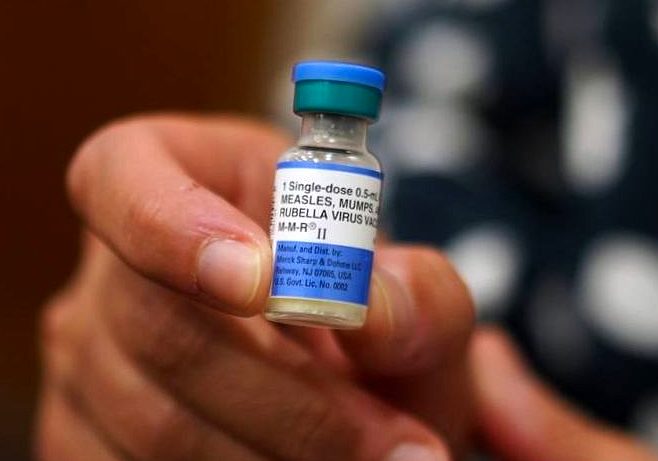
With measles officially back in circulation in the United States, more adults are questioning whether they need a booster shot. For most people, according to doctors interviewed by the American press, the answer is no.
Dr. Richard Martinello, of Yale School of Medicine, explains that most of the population is already protected, either because they were vaccinated as children or because they had the disease as kids. In recent days, the United States, Mexico and Bolivia lost their measles-free status after persistent outbreaks wiped out decades of progress in controlling the disease. Canada had already lost its measles elimination status last year.
Doctors emphasize that getting both doses of the MMR vaccine (measles, mumps and rubella) remains the most effective protection against one of the most contagious viruses in the world. Immunity from the vaccine typically lasts a lifetime, as does the protection gained by those who have already had the disease. In the United States, people born before 1957 are presumed immune, since nearly everyone contracted measles as a child during that era.
Who may need an extra dose
Still, some specific groups may want to consider a booster. Health care workers born before 1957 who have no proof of immunity are more exposed to contact with infected patients and could contract or transmit the virus to vulnerable people.
Also on that list are adults vaccinated between 1963 and 1967, a period when some children received an inactivated version of the vaccine, made with a killed virus that was less effective than today's formula, which uses a live attenuated virus. Doctors recommend that anyone who knows they received that older version, or who is unsure, get at least one dose of the live MMR vaccine. A single dose is 93% effective against measles, while two doses raise protection to 97%.
Until 1989, the standard was a single dose. Today, the recommendation is that adults have at least one documented dose of the MMR vaccine, with a second dose advised for higher-risk groups who have no other evidence of immunity.
"Anyone who has never been vaccinated should get vaccinated, unless they were born before 1957," says Joshua Sharfstein, of the Johns Hopkins Bloomberg School of Public Health. "Anyone who got just one dose can consider whether they're in a risk group that would justify a second dose."
According to Sharfstein, that risk group includes students, health care workers, international travelers and people living with immunocompromised family members. In regions with active outbreaks, health authorities sometimes recommend two doses for the entire population. For those who received only one dose, especially in areas with virus circulation, Martinello recommends talking to a doctor about whether an additional dose is needed.
How to check your vaccination history
Those who don't know how many doses they received, or whether they were vaccinated at all, can turn to a few sources. The U.S. Centers for Disease Control and Prevention (CDC) suggest asking parents or a doctor, checking health records from school or college, or contacting former employers that required proof of vaccination. It's also possible to check with the state health department, since some keep adult vaccination records.
For those still unsure, there's the option of a blood test that checks for measles antibodies. Martinello notes that this test isn't the ideal measure of protection: although it's accurate, science still doesn't perfectly understand how the result relates to a person's actual level of immunity.
According to doctors, getting a booster dose as a precaution carries no risk, except for groups that shouldn't receive the vaccine at all, such as pregnant women.
"This is a moment not only to check your own status, but also to encourage others to make sure they are properly vaccinated," says Sharfstein. "A lot of people stopped thinking about measles... but now it's something to take into account."